Ireland Weather by Month: A Complete Guide
Ireland is known for its lush green landscapes, frequent rain, and mild climate. Thanks to the influence of the Atlantic Ocean and the Gulf Stream, the country experiences relatively moderate temperatures year-round compared to other places at similar latitudes.
If you’re planning a visit or just curious, here’s a detailed month-by-month breakdown of Ireland’s weather.
Ireland Temperatures by Month
You can click the image below to view the full-size weather chart for Ireland.
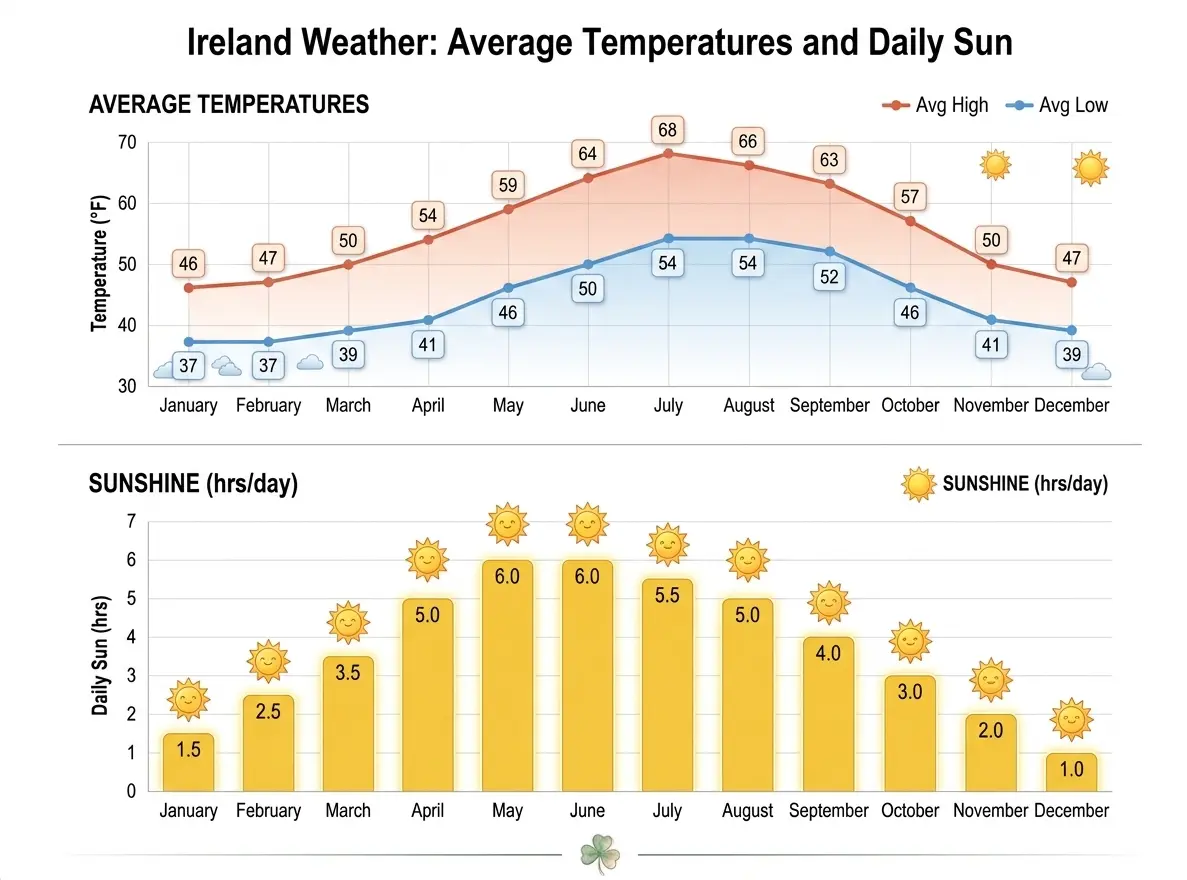
January
January is the coldest month in Ireland.
- Average temperature: 37–46°F
- Conditions: Cold, damp, and often windy
- Rainfall: Frequent showers
Snow is rare but possible, especially inland and in higher areas. Days are short, with limited daylight.
February
February remains chilly but begins to show slight improvement.
- Average temperature: 37–48°F
- Conditions: Cloudy with occasional sunny spells
- Rainfall: Moderate
It’s still winter, but you may notice slightly longer days and fewer storms.
March
Spring begins to emerge in March.
- Average temperature: 39–52°F
- Conditions: Mix of sunshine and showers
- Rainfall: Moderate
This month is famous for St. Patrick’s Day (March 17), often bringing lively celebrations despite unpredictable weather.
April
April is one of the more pleasant months.
- Average temperature: 41–55°F
- Conditions: Brighter days with scattered showers
- Rainfall: Light to moderate
You’ll start to see blooming flowers and greener countryside.
May
May is considered one of the best months to visit.
- Average temperature: 45–59°F
- Conditions: Mild, relatively dry, and sunny
- Rainfall: Lower than average
Longer daylight hours make it ideal for outdoor activities.
June
Early summer brings comfortable weather.
- Average temperature: 50–64°F
- Conditions: Mild and often sunny
- Rainfall: Moderate
Days are very long, with sunset as late as 10 PM in some areas.
July
July is typically the warmest month.
- Average temperature: 54–66°F
- Conditions: Warm (by Irish standards), with sunshine and occasional rain
- Rainfall: Moderate
Perfect for festivals, road trips, and exploring cities like Dublin.
August
August continues the summer trend.
- Average temperature: 54–66°F
- Conditions: Mild, sometimes humid
- Rainfall: Moderate
Weather is still good for travel, though rain can appear at any time.
September
Autumn begins, but weather remains pleasant.
- Average temperature: 50–61°F
- Conditions: Cooler evenings, mixed sunshine and rain
- Rainfall: Increasing slightly
Crowds thin out, making it a great time for quieter travel.
October
October becomes noticeably cooler.
- Average temperature: 46–57°F
- Conditions: Windy, cloudy, and wetter
- Rainfall: High
Fall colors appear, especially in rural landscapes.
November
Winter starts to set in.
- Average temperature: 41–50°F
- Conditions: Cold, dark, and damp
- Rainfall: Frequent
Storms become more common, especially along the coast.
December
December is cold but festive.
- Average temperature: 39–48°F
- Conditions: Chilly with short days
- Rainfall: Moderate to high
Cities light up for the holiday season, creating a cozy atmosphere.
Ireland Weather by Month
| Month | Avg High (°F) | Avg Low (°F) | Rainfall (inches) | Sun (hrs/day) |
|---|---|---|---|---|
| January | 46 | 37 | 3.1 | 1.5 |
| February | 48 | 37 | 2.5 | 2.5 |
| March | 52 | 39 | 2.3 | 3.5 |
| April | 55 | 41 | 2.0 | 5.0 |
| May | 59 | 45 | 2.4 | 6.0 |
| June | 64 | 50 | 2.8 | 6.5 |
| July | 66 | 54 | 2.6 | 5.5 |
| August | 66 | 54 | 3.1 | 5.0 |
| September | 61 | 50 | 3.0 | 4.0 |
| October | 57 | 46 | 3.7 | 3.0 |
| November | 50 | 41 | 3.3 | 2.0 |
| December | 48 | 39 | 3.1 | 1.5 |
Quick insights:
- Sunshine peaks from May to July, making it the best time for outdoor travel.
- Winter months (Nov–Jan) have very limited daylight and sunshine.
- Rainfall remains fairly consistent year-round, with a slight increase in autumn.
20 FAQs about weather in Ireland
1. What is the weather like in Ireland year-round?
Ireland has a mild, temperate climate with cool summers, mild winters, and frequent rainfall throughout the year.
2. What is the best month to visit Ireland for good weather?
May, June, and September are often considered the best months due to mild temperatures, longer daylight, and relatively lower rainfall.
3. Does it rain every day in Ireland?
No, it doesn’t rain every day, but showers are frequent and can happen at any time.
4. What is the warmest month in Ireland?
July is usually the warmest month, with average highs around 68°F (20°C).
5. What is the coldest month in Ireland?
January is typically the coldest month, with temperatures ranging from 37°F to 46°F (3°C to 8°C).
6. Does Ireland get snow?
Snow is rare in Ireland and usually light, mainly occurring in winter and in higher elevations.
7. Why is Ireland so green?
Frequent rainfall and a mild climate help maintain lush vegetation, giving Ireland its nickname “The Emerald Isle.”
8. Is Ireland windy?
Yes, Ireland can be quite windy, especially along coastal areas and during winter months.
9. How much rainfall does Ireland get annually?
Ireland receives about 30–50 inches (750–1,250 mm) of rain annually, depending on the region.
10. Does Ireland have extreme weather?
Extreme weather is rare, but storms and strong winds can occur, particularly in autumn and winter.
11. What should I pack for Ireland weather?
Bring layers, a waterproof jacket, comfortable shoes, and an umbrella.
12. How long are the days in Ireland during summer?
Summer days are long, with up to 16–18 hours of daylight in June.
13. How short are the days in winter?
Winter days can be very short, with only about 7–8 hours of daylight in December.
14. Is Ireland humid?
Yes, Ireland has relatively high humidity due to its maritime climate, but it usually feels comfortable.
15. Does Ireland have a dry season?
No, Ireland does not have a true dry season—rainfall is spread throughout the year.
16. What is spring weather like in Ireland?
Spring (March–May) is mild, with increasing sunshine and blooming landscapes, though showers are still common.
17. What is autumn weather like in Ireland?
Autumn (September–November) is cooler and wetter, with beautiful fall colors and fewer tourists.
18. Does the weather change quickly in Ireland?
Yes, weather can change rapidly—locals often say you can experience four seasons in one day.
19. Is Ireland colder than the UK?
Ireland and the United Kingdom have similar climates, though Ireland is often slightly milder due to Atlantic influences.
20. What causes Ireland’s mild climate?
The Gulf Stream helps keep temperatures moderate, preventing extreme cold in winter.
Final Thoughts
Ireland’s weather is famously unpredictable—you might experience sunshine, rain, and wind all in a single day. No matter the month, it’s wise to pack:
- A waterproof jacket
- Layers for warmth
- Comfortable shoes
The best time to visit is generally May through September, when temperatures are mild and days are longest. However, each season offers its own charm, from spring blooms to cozy winter evenings.
