Japan Weather by Month: A Complete Guide
Japan’s climate is as diverse as its geography, stretching from the snowy north of Hokkaido to the subtropical south of Okinawa. If you’re planning a trip—or just curious—understanding the weather month by month helps you pick the perfect time to visit.
Japan Temperatures by Month
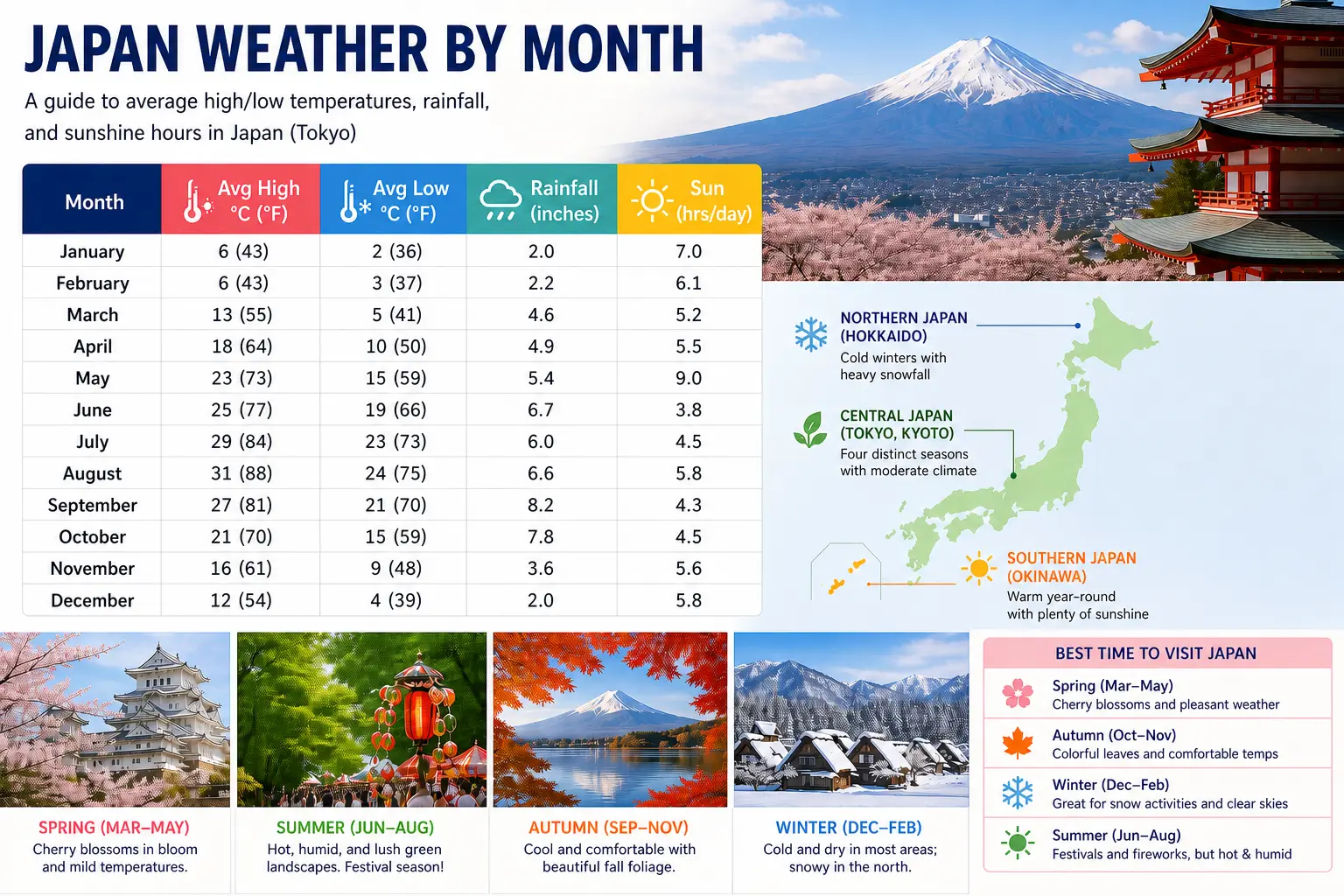
You can click the image below to view the full-size weather chart for Japan.
January – Cold and Snowy
January is mid-winter in Japan.
- Northern regions like Hokkaido are covered in deep snow—ideal for skiing.
- Cities like Tokyo are cold but usually dry, with temperatures around 1–10°C.
- Expect clear skies and crisp air.
February – Peak Winter
- The cold continues, especially in the north.
- Snow festivals, including the famous Sapporo Snow Festival, attract visitors.
- Still a great time for winter sports.
March – Early Spring
- Temperatures begin to rise slowly.
- Plum blossoms appear, especially in central regions.
- Weather can be unpredictable—some chilly days remain.
April – Cherry Blossom Season
- One of the most popular months to visit.
- Cherry blossoms (sakura) bloom across cities like Tokyo and Kyoto.
- Mild temperatures (10–20°C) and generally pleasant weather.
May – Warm and Comfortable
- Late spring offers ideal conditions: warm but not humid.
- Clear skies and blooming greenery.
- Perfect for sightseeing and outdoor activities.
June – Rainy Season Begins
- Known as “tsuyu” (rainy season).
- Frequent rain and high humidity.
- Temperatures hover around 20–25°C.
July – Hot and Humid
- Summer arrives with strong heat and humidity.
- Temperatures often exceed 30°C.
- Festivals and fireworks events begin across the country.
August – Peak Summer Heat
- The hottest month in most regions.
- High humidity can make it feel even hotter.
- Coastal areas and mountains offer some relief.
September – Typhoon Season
- Still warm, but with increased rainfall.
- Typhoons occasionally affect travel plans.
- Late September begins cooling slightly.
October – Cool and Pleasant
- One of the best months to visit.
- Mild temperatures and lower humidity.
- Autumn foliage starts appearing in northern areas.
November – Autumn Colors
- Fall foliage peaks in many regions.
- Comfortable temperatures (10–20°C).
- Ideal for sightseeing and photography.
December – Start of Winter
- Temperatures drop again.
- Snow begins in northern Japan.
- Cities light up with winter illuminations and festive decorations.
| Month | Avg High °C (°F) | Avg Low °C (°F) | Rainfall (inches) | Sun (hrs/day) |
|---|---|---|---|---|
| January | 6 (43) | 2 (36) | 2.0 | 7.0 |
| February | 6 (43) | 3 (37) | 2.2 | 6.1 |
| March | 13 (55) | 5 (41) | 4.6 | 5.2 |
| April | 18 (64) | 10 (50) | 4.9 | 5.5 |
| May | 23 (73) | 15 (59) | 5.4 | 9.0 |
| June | 25 (77) | 19 (66) | 6.7 | 3.8 |
| July | 29 (84) | 23 (73) | 6.0 | 4.5 |
| August | 31 (88) | 24 (75) | 6.6 | 5.8 |
| September | 27 (81) | 21 (70) | 8.2 | 4.3 |
| October | 21 (70) | 15 (59) | 7.8 | 4.5 |
| November | 16 (61) | 9 (48) | 3.6 | 5.6 |
| December | 12 (54) | 4 (39) | 2.0 | 5.8 |
Quick insights:
- Most sunshine: May stands out with long, bright days.
- Least sunshine: June due to the rainy season.
- Comfortable months: Spring and autumn offer balanced temperatures and decent sun.
Best Time to Visit Japan
- Spring (March–May): Cherry blossoms and mild weather
- Autumn (October–November): Colorful leaves and comfortable temperatures
- Winter (December–February): Best for snow lovers and skiing
- Summer (June–August): Festivals, but hot and humid
20 useful FAQs about weather in Japan
General Climate
- What is the climate like in Japan?
Japan has four distinct seasons: cold winters, mild springs, hot summers, and cool autumns. - Does Japan experience all four seasons?
Yes, especially in central regions like Tokyo and Kyoto. - Is Japan’s weather the same across the country?
No, it varies greatly—from snowy Hokkaido to tropical Okinawa.
Best Time to Visit
- When is the best time to visit Japan?
Spring (March–May) and autumn (October–November) offer the best weather. - When is cherry blossom season?
Usually late March to early April in Tokyo and Kyoto. - When is autumn foliage season?
Typically November in central Japan, earlier in northern regions.
Winter (December–February)
- How cold does it get in Japan in winter?
Temperatures can drop below freezing in the north, while Tokyo stays around 0–10°C. - Does it snow in Japan?
Yes, especially in Hokkaido and mountainous areas. - Is winter a good time to visit Japan?
Yes, for skiing, hot springs, and winter festivals.
Spring (March–May)
- What is spring weather like in Japan?
Mild and comfortable with blooming flowers. - Does it rain a lot in spring?
Rain increases gradually but is not excessive.
Summer (June–August)
- How hot is summer in Japan?
Temperatures often exceed 30°C with high humidity. - What is the rainy season in Japan?
The rainy season (tsuyu) occurs mainly in June. - Are there many festivals in summer?
Yes, summer is famous for fireworks and cultural festivals.
Autumn (September–November)
- What is autumn weather like in Japan?
Cool, dry, and comfortable—ideal for travel. - Does Japan have typhoons?
Yes, mainly in September, sometimes affecting travel plans.
Regional Differences
- Which part of Japan is the coldest?
Hokkaido is the coldest region with heavy snowfall. - Which part of Japan is the warmest?
Okinawa has a subtropical climate and stays warm year-round.
Travel Tips
- What should I pack for Japan weather?
It depends on the season—layers are recommended year-round. - Is Japan humid?
Yes, especially in summer, when humidity can be very high.
Japan offers something unique in every season. Whether you want snowy landscapes, blooming sakura, or vibrant autumn leaves, timing your visit makes all the difference.
